Most people assume treating a tumour, a blocked artery, or internal bleeding means major surgery. In many cases, it doesn't. Interventional radiology (IR) delivers targeted, image-guided treatment through a tiny incision, often smaller than a centimetre, with outcomes that rival open surgery and recovery times that don't.
If your doctor has referred you for an IR procedure, or you're trying to understand what these treatments actually involve, this breakdown covers the most common techniques, when they're used, and what you can expect.
What Is Interventional Radiology
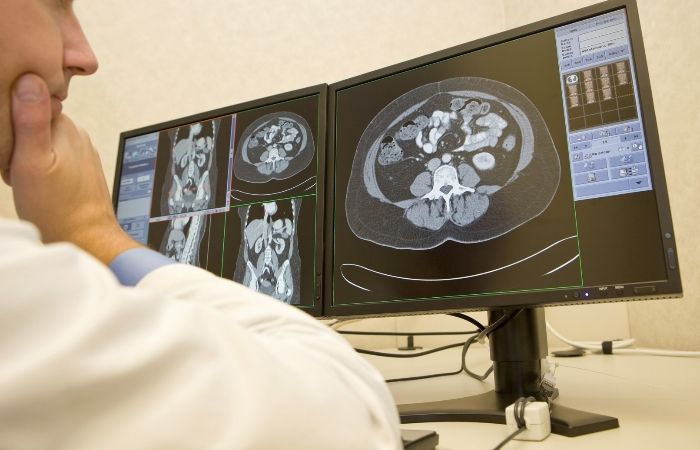
Interventional radiology is a medical speciality that uses real-time imaging such as CT scans, ultrasound, fluoroscopy, or MRI to guide minimally invasive procedures inside the body. Instead of opening up a surgical site, the radiologist works through a small needle puncture or catheter, navigating to the exact location using live imaging as a guide.
The defining feature of IR is precision. Because every move is tracked on screen, the radiologist can reach structures deep inside the body, including blood vessels, organs, tumours, and nerves, without disturbing surrounding tissue.
IR sits at the intersection of diagnosis and treatment. Some procedures are purely diagnostic, like a biopsy, while others are therapeutic, like unblocking an artery or destroying a tumour.
Why Interventional Radiology Matters
For many conditions, IR offers a genuine alternative to open surgery. That matters for several reasons.
Less trauma to the surrounding tissue means less post-operative pain. Shorter procedures translate to less time under anaesthesia. Smaller incision sites reduce infection risk. And faster recovery means patients return to normal activity days rather than weeks after treatment.
For patients who are older, have complex comorbidities, or are considered high surgical risk, IR often makes treatment possible when traditional surgery isn't a viable option.
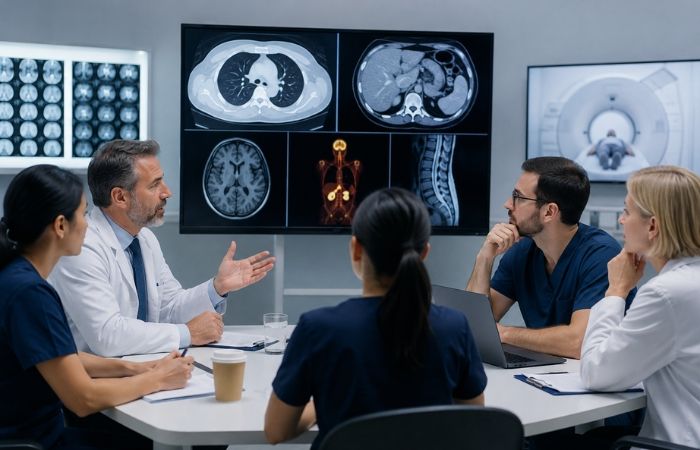
It also matters diagnostically. Image-guided biopsies allow clinicians to sample tissue from organs that would otherwise require exploratory surgery to reach, with results available within 24 to 48 hours.

The Three Core IR Techniques
Embolisation
Embolisation is a procedure that deliberately blocks blood flow to a specific area of the body. The radiologist threads a thin catheter through the vascular system to the target vessel, then releases embolic agents such as small particles, coils, or liquid agents that obstruct blood flow.
The goal depends on the indication. In cancer treatment, cutting off the blood supply to a tumour starves it of nutrients. In cases of internal bleeding, embolisation stops haemorrhage without open surgery. It's also used to treat uterine fibroids, varicoceles, and arteriovenous malformations.
Common types include tumour embolisation, which blocks blood supply to hepatic or other tumours; uterine fibroid embolisation, which shrinks fibroids by cutting off their blood supply; and haemostatic embolisation, which controls active bleeding from trauma or post-surgical complications.
Recovery varies by indication but is typically far shorter than surgical alternatives. Most patients are discharged within 24 hours.
Ablation
Ablation destroys abnormal tissue using heat, cold, or electrical energy delivered through a needle placed directly into the target site. Imaging guides the needle to the precise location, and the treating radiologist monitors the ablation zone in real time.
Radiofrequency ablation uses high-frequency electrical currents to generate heat, destroying tumour cells. Microwave ablation uses microwave energy to heat tissue more rapidly and uniformly, with a larger ablation zone. Cryoablation freezes tissue using argon gas, often preferred when treating tumours near sensitive structures.
Ablation is used across liver, kidney, lung, and bone tumours, as well as for pain management in certain musculoskeletal conditions. It's a common choice when surgery isn't feasible or when the tumour is small and well-defined.
Angioplasty and Vascular Interventions
Angioplasty restores blood flow through narrowed or blocked blood vessels. A catheter is guided to the site of the blockage, and a small balloon is inflated to widen the artery. In most cases, a stent is placed to hold the vessel open.
It's most commonly performed for peripheral arterial disease, where reduced blood flow to the legs causes pain, cramping, or ulceration. It's also used in renal artery stenosis and dialysis access management.
Related vascular procedures include thrombolysis, which dissolves blood clots using medication delivered directly via catheter; IVC filter placement, which inserts a filter to catch clots before they reach the lungs; and TIPS, which creates a channel within the liver to redirect blood flow in portal hypertension.
IR Techniques at a Glance

How an Interventional Radiology Procedure Works
Understanding the process removes uncertainty, particularly if you're waiting on a referral.

Referral and pre-procedure assessment
Your GP or specialist refers you for the procedure. The IR team reviews your imaging history, medical background, and any contraindications. Depending on the complexity, you may attend a pre-procedure consultation.
Preparation
Most procedures require fasting for four to six hours beforehand. You'll need to disclose current medications, particularly blood thinners and diabetes medications. Arrange for someone to drive you home if sedation is involved.
The procedure
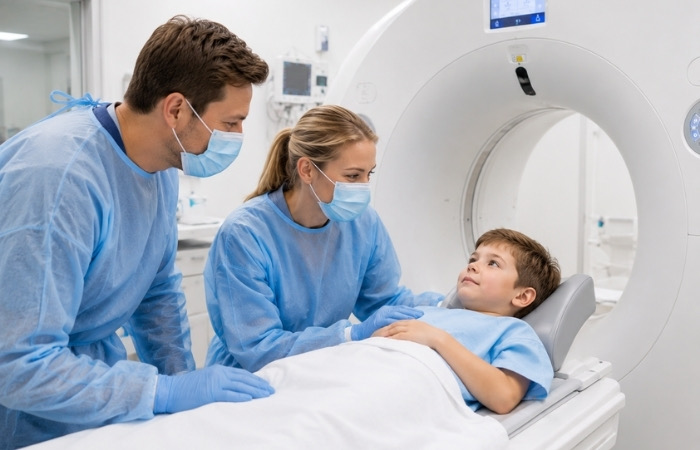
You'll be positioned on the imaging table, and a local anaesthetic will be administered to the access site. The radiologist uses real-time imaging to guide the instrument to the target area and performs the procedure. Most IR procedures take between 30 and 90 minutes.
Recovery and monitoring
After the procedure, you'll be monitored in a recovery area. Most patients are discharged the same day or within 24 hours. You'll receive post-procedure care instructions and information about expected symptoms.
Results and follow-up
If the procedure was diagnostic, results are typically available within 24 to 48 hours. Therapeutic procedures may require follow-up imaging to assess the outcome.
When IR Is Recommended Over Surgery
Interventional radiology isn't always the first option, but it's often the better one in specific circumstances. Your specialist or referring doctor will consider factors including the size and location of the target area, your overall health and surgical risk profile, whether a minimally invasive approach can achieve comparable outcomes, and how quickly you need to recover.
IR is particularly well-suited to patients managing chronic conditions who need repeated interventions, patients with advanced disease where surgery carries significant risk, and situations where preserving organ function matters as much as treating the condition itself.
What to Expect During Recovery
Most IR procedures involve a brief recovery period that looks very different from surgical aftercare.
You'll typically spend a few hours in a monitored recovery area before being discharged. Some procedures, particularly those involving sedation or complex vascular work, may require an overnight stay.
Pain at the access site is common and usually manageable with over-the-counter medication. Post-embolisation syndrome, a temporary flu-like response involving fatigue, low-grade fever, and localised discomfort, can occur after embolisation procedures and typically resolves within a week.
Your care team will provide specific instructions based on the procedure type, including activity restrictions, wound care, and when to seek urgent review.
Frequently Asked Questions
Is interventional radiology the same as diagnostic radiology?
No. Diagnostic radiology produces images to identify and assess conditions. Interventional radiology uses those same imaging tools to perform treatment inside the body. The two specialities are closely related but serve different purposes.
Do I need a referral for an interventional radiology procedure?
Yes. IR procedures require a referral from your GP or treating specialist. The referral ensures the procedure is clinically appropriate and that your medical history has been reviewed before you attend.
Will I be awake during the procedure?
Most IR procedures use a local anaesthetic at the access site, with or without sedation. General anaesthesia is uncommon but may be used for more complex cases or in paediatric patients. Your team will discuss what's appropriate for your procedure beforehand.
How long does an IR procedure take?
Most procedures take between 30 and 90 minutes, though this varies depending on complexity. You should allow additional time for preparation, recovery, and monitoring before discharge.
Are IR procedures covered by Medicare?
Many interventional radiology procedures attract a Medicare rebate, depending on the clinical indication and the specific procedure performed. It's worth confirming your eligibility and any out-of-pocket costs before your appointment.
How Axis Imaging Supports Interventional Radiology
Interventional radiology works best when the imaging that guides it is accurate, timely, and reviewed by experienced radiologists. The quality of pre-procedure imaging directly influences how precisely a procedure can be planned and performed.

Axis Imaging provides expert diagnostic imaging, including CT, ultrasound, and MRI, with results reported within 24 hours. Most services are bulk billed, and the team works closely with referring doctors to ensure patients are well-prepared and properly supported before and after their procedure.
Contact us to find out how we can support your imaging needs ahead of an interventional procedure.