
Taking your child for a scan can feel daunting, especially if it's their first time. Most parents have questions about whether the scan is safe, how to prepare a child who doesn't fully understand what's happening, and what the results might mean for their care. Understanding the process in advance can make the appointment far less stressful for both of you.
Children can safely have ultrasound, X-ray and CT scans when clinically indicated, and each scan is selected with your child's comfort and safety as the priority. Your doctor will recommend the option best suited to your child's symptoms.
Why Children Sometimes Need Imaging
Paediatric imaging is requested for many of the same reasons adult imaging is, but children present differently and their bodies respond differently to injury and illness. A toddler who's fallen might need an X-ray to rule out a fracture. A baby with persistent vomiting might need an abdominal ultrasound. A child with a suspected head injury might need a CT scan to check for internal bleeding.
Doctors weigh up several factors before referring a child for imaging, including the suspected condition, the child's age, and how urgently a diagnosis is needed. A clinician will always choose the option that answers the clinical question while keeping radiation exposure and discomfort as low as possible.
Common Scans Used in Children
Each scan type works differently and is suited to different symptoms, from soft tissue concerns to suspected fractures.
Ultrasound
Ultrasound uses high-frequency sound waves to create real-time images of organs and tissue, with no radiation involved. It's commonly used to investigate abdominal pain, hip development in infants, and certain soft tissue concerns. Hip ultrasound in particular is a routine screening tool for developmental dysplasia of the hip, usually performed in the first few months of life.

X-ray
X-ray uses a small amount of radiation to capture images of bones and certain internal structures, producing a result in seconds. It's typically used for suspected fractures, chest infections, or swallowed objects, and the dose involved is very low with modern digital equipment.
CT Scan
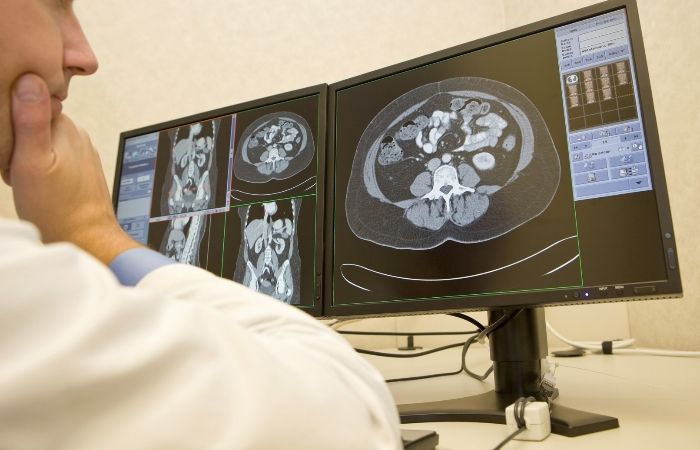
CT, or computed tomography, combines multiple X-ray images taken from different angles to build detailed cross-sectional pictures of the body. It's generally reserved for situations where ultrasound or X-ray haven't given a clear enough picture, such as some head injuries, complex abdominal concerns, or suspected appendicitis.
MRI
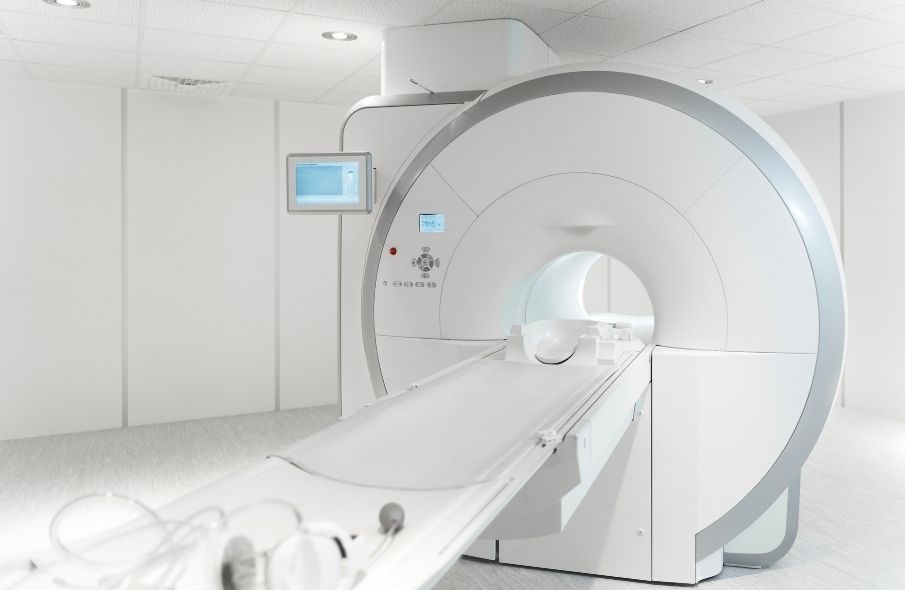
MRI, or magnetic resonance imaging, uses a strong magnetic field and radio waves to produce detailed images of soft tissue, joints and the brain, without any radiation. While not always available on-site, it may be recommended where this level of detail is needed. It typically takes longer than other scans and sometimes requires sedation in younger children.
Is Imaging Safe for Children
Imaging equipment used on children is adjusted for their smaller size, not simply scaled down from adult settings. Radiographers follow a principle of using the lowest dose that still achieves a diagnostic result, often referred to as ALARA, meaning as low as reasonably achievable, applied to every scan a child has.
 If you have specific concerns about radiation exposure for your child, raise them with your referring doctor. They can explain why a particular scan has been recommended and why its benefit outweighs the small risk involved.
How to Prepare Your Child

Step 1. Explain the process simply.
Use age-appropriate language to describe what will happen. Comparing the scan to taking a photo can help reduce anxiety in younger children, and it helps to avoid anything that sounds like a warning.
Step 2. Follow any fasting or hydration instructions.
Abdominal ultrasounds often require fasting beforehand, while pelvic scans may require a full bladder. These instructions are confirmed when the appointment is booked.
Step 3. Dress comfortably.
Loose, comfortable clothing makes it easier for your child to stay still. Avoid clothing with metal fastenings, zips or buttons if an X-ray is being performed.
Step 4. Bring a comfort item.
A favourite toy, blanket or device can help keep your child calm during the scan. For babies, timing the appointment around a feed or nap often helps.
Step 5. Plan for siblings if needed.
If you have other children, consider arranging care for them during the appointment so you can give your full attention to the child being scanned.
Step 6. Stay close during the scan.
Parents are usually welcome to stay in the room for reassurance, particularly for younger children. In cases involving X-ray, you may be asked to wear a lead apron if you remain in the room.
What Happens During the Scan
Most paediatric scans follow a similar process to adult imaging, adjusted for comfort and attention span. Ultrasound involves a warm gel and a handheld probe moved gently over the skin, which most children find ticklish rather than uncomfortable. X-rays require your child to hold still briefly while the image is taken.
 CT scans involve lying on a table that moves through a scanner, and the actual imaging is usually very quick, though getting a young child settled can take longer. Sedation is occasionally used for very young children who can't stay still for longer scans, but it's not the default approach.
Sonographers and radiographers experienced in working with children will explain each step before it happens, using language suited to your child's age.
What Happens After the Scan
Once the scan is complete, your child can usually return to normal activities straight away, with no recovery time needed for ultrasound or X-ray. A radiologist reviews the images and prepares a written report, which is sent to your referring doctor, typically within 24 hours, with urgent cases prioritised.
Your doctor will go through the results with you and explain what they mean for your child's diagnosis or treatment plan.
Frequently Asked Questions
Is ultrasound safe for babies?
Yes. It's one of the most frequently used tools for infants in their first year, particularly for routine hip screening, since the imaging window babies provide makes early detection of hip development issues more reliable than in older children.
Will my child need to be sedated?
Sedation is uncommon and only considered for longer scans, such as some CT or MRI examinations, where a young child can't remain still. If it's needed, your doctor will explain the process beforehand, including any fasting requirements and monitoring time afterward.
Can I stay in the room with my child?
In most cases, yes, and we generally encourage it for younger children. The main exception is during certain X-rays, where staying in the room means wearing a lead apron for your own protection.
How long does a paediatric scan take?
This depends on the scan type. Ultrasounds typically take 15 to 30 minutes, X-rays are usually completed within a few minutes, and CT scans involve only a short period of actual imaging once your child is positioned.

Do I need a referral for my child's scan?
Yes, a referral from your doctor is required, specifying which scan type is appropriate based on your child's symptoms.
Helping Your Child Through Their Scan
Preparation and clear communication make the biggest difference to how a child experiences imaging. Knowing what to expect, why a particular scan has been recommended, and what each step involves helps take much of the uncertainty out of the appointment for both parent and child.
Every child responds differently, and what settles one might not work for another. Staying calm yourself, keeping language simple, and giving your child a sense of what's coming next all help more than any single trick. If a scan doesn't go as smoothly as planned, that's not unusual either, and the team on the day can adjust the approach to suit your child.
Axis Imaging works with families across Mickleham and Melbourne's northern suburbs, and paediatric scans make up a regular part of what the team sees day to day. That experience means staff are familiar with the small adjustments that make a real difference for younger patients, from pacing an appointment around a child's mood to explaining a scan in terms a five-year-old can follow.
Contact us to ask about preparing your child for an upcoming scan or to book an appointment.