
Keeping children safe during medical imaging is a top priority for parents, carers, and healthcare providers. When an injury or illness requires an X-ray, many adults worry about radiation exposure and whether the procedure is necessary. These concerns are understandable, yet modern paediatric imaging is far safer, more precise, and more tightly regulated than ever before in Australia. Understanding how X-ray safety works, why protective measures matter, and what parents can expect can make the entire experience far more reassuring.
This guide breaks down paediatric X-ray safety in clear, practical terms. It outlines how radiation is minimised, how equipment is adapted for young bodies, and what best practices Australian providers follow. It also offers advice for parents who want to feel confident and informed before their child undergoes an X-ray.
Why X-ray Safety Matters for Children
Children are not simply smaller adults. Their bones, tissues, and organs are still developing, which means they can be more sensitive to radiation exposure. At the same time, children are more likely to require medical imaging due to falls, sports injuries, rapid bone growth, and illnesses that must be diagnosed quickly.
X-rays remain one of the most important diagnostic tools available. They are fast, painless, and exceptionally effective for identifying fractures, lung conditions, dental issues, and abdominal problems. Paediatric clinicians use them because the benefits usually far outweigh the risks, especially when safety protocols are correctly followed.

Understanding Radiation in Simple Terms
An X-ray uses a small amount of ionising radiation to create a picture of the inside of the body. It is natural to associate radiation with danger, but it is important to put this exposure into perspective.
A typical paediatric chest X-ray delivers about the same radiation dose as a child receives from natural background radiation over 10 days. These extremely low doses are achieved through advances in detector technology, digital systems, and paediatric-specific imaging settings.
How Paediatric Imaging Providers Keep Children Safe
The ALARA principle
Australian radiology practices follow the ALARA principle: As Low As Reasonably Achievable. This guiding framework ensures radiation doses are kept at the minimum needed for a clear and reliable image. ALARA shapes every stage of the imaging process, from machine calibration to patient positioning.
Child-specific imaging settings
Modern X-ray systems are designed with tailored paediatric presets. These settings automatically adjust radiation output to suit the size, age, and anatomy of the child. Lower doses are used for infants and toddlers, while slightly higher settings may be required for adolescents.
Faster image capture
Advances in detector sensitivity mean that images can be taken in milliseconds. The faster the image capture, the less radiation is required. This also reduces the chance of motion blur, an important factor when imaging children who may struggle to sit still.
Smaller exposure areas
Collimation is the process of narrowing the X-ray beam so only the required part of the body is exposed. For children, radiographers use tight beam collimation to protect surrounding tissues. Shielding may also be used in specific cases, although it is now applied selectively in line with updated evidence-based guidelines.
Highly trained paediatric radiographers
Paediatric imaging requires specialist skills. Radiographers trained in paediatric care understand how to position children safely, communicate clearly, and keep movement to a minimum without causing stress. Their expertise is one of the most significant factors in achieving high-quality images with minimal exposure.

One Key Statistic: Declining Radiation Doses in Modern Imaging
According to the Australian Radiation Protection and Nuclear Safety Agency (ARPANSA), advances in digital radiography have reduced typical diagnostic X-ray doses by up to 40 per cent over the last decade. This trend reflects improved equipment, stricter protocols, and widespread adoption of paediatric-specific imaging workflows.
Preparing Your Child for an X-ray
Keep explanations simple
Young children benefit from clear, calm explanations. Let them know that the X-ray machine will take a picture of the inside of their body and that it will not hurt. Avoid technical details that may create unnecessary worry.
Dress comfortably
Loose clothing without metallic prints, zips, or buttons is ideal. Metal objects can interfere with the image, so jewellery and hair accessories should be removed before the appointment.
Bring comfort items
A favourite toy or blanket can help children remain calm and still during the procedure. Some imaging practices also display child-friendly murals or play calming videos to create a more relaxed environment.
Follow instructions from the staff
Paediatric radiographers understand how to guide both parents and children through the process. They may ask a parent to stand nearby for reassurance, or they may use gentle immobilisation aids to prevent movement during exposure. These tools are safe, comfortable, and essential for producing a clear diagnostic image with the lowest possible dose.
What to Expect During the Appointment
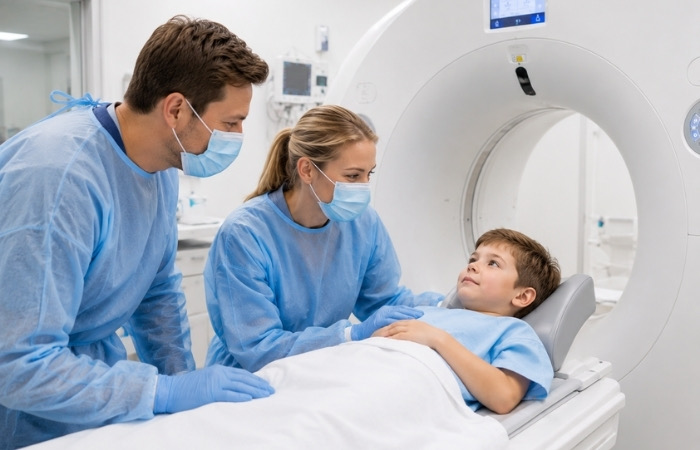
Most paediatric X-rays take only a few minutes. The radiographer will position your child, ensure they are comfortable, and stand behind a protective screen while the image is taken. Your child will not feel the X-ray beam.
If multiple views are required, the radiographer may reposition your child to capture the anatomy from different angles. Once complete, the images are reviewed to ensure they are clear enough for diagnosis. No additional exposure is taken unless necessary.

When Is an X-ray Recommended for Children?
Clinicians rely on X-rays for a range of paediatric conditions, including:
Suspected fractures and sprains
These are the most common reasons children need imaging, especially after playground or sports accidents.
Chronic or acute breathing problems
A chest X-ray can provide rapid insight into infections, asthma complications, or unexplained breathing difficulties.
Digestive concerns
Abdominal X-rays help identify blockages, swallowed objects, or digestive irregularities.
Dental development
Dentists often use X-rays to monitor growth, check alignment, or assess tooth health.
Choosing Safe, Local, Child-friendly Imaging
Understanding the protective measures used in modern paediatric imaging helps parents make informed choices. With advanced digital systems, trained radiographers, and strict Australian safety standards, families in Mickleham, Victoria, can access safe, reliable, and child-focused diagnostic imaging when needed.
Choosing the right imaging provider is not only about accuracy, but it is also about ensuring your child receives safe and supportive care. At Axis Imaging, we provide high-quality paediatric X-ray services tailored to families across Mickleham and the surrounding northern suburbs. Contact us today to learn how our experienced team can support your child’s diagnostic needs.